
About this historical patient account: The information below describes reported observations from one case. It does not establish treatment efficacy, safety, a causal relationship or an expected outcome. Outcomes vary, and reported improvement does not demonstrate cure. Do not change prescribed medicines or delay established care based on this account.
Intervention context: This account does not establish that the cell, growth-factor or other biological interventions described are approved or effective for this diagnosis. Some may be investigational. A qualified specialist should explain the current evidence, regulatory status, alternatives, uncertainties and risks before any treatment decision.
Case Study: Neural Growth Factor Therapy for Spinal Cord Injury
Patient Information
Admission & Treatment
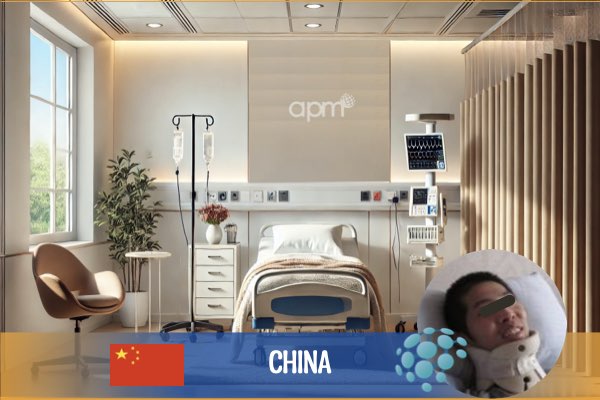
On December 12, 2010, Mr. Jian Zhang was admitted to Beijing Puhua International Hospital following a spinal cord injury and a previous cervical vertebrae operation. Upon admission, he exhibited complete paralysis of his arms and legs, loss of sensation below the C-5 plane, elevated body temperature (37.8℃), and pressure sores.
Mr. Zhang received Neural Growth Factor Therapy, combined with stem cell activation and proliferation program, along with rehabilitation training during his one-month stay.
Clinical Outcome
One month post-admission, Mr. Zhang demonstrated significant improvements in his neurological status:
His pressure sores also showed signs of improvement.
Further progress would require follow-up assessment and cannot be predicted from this account.

About this historical patient account: The information below describes reported observations from one case. It does not establish treatment efficacy, safety, a causal relationship or an expected outcome. Outcomes vary, and reported improvement does not demonstrate cure. Do not change prescribed medicines or delay established care based on this account.
Case Study: Spinal Cord Reconstruction Surgery for Spinal Cord Injury
Patient Information
Diagnosis
Medical History
Admitted to Beijing Puhua International Hospital six months post-motor vehicle accident with complaints of limbs mobility disorder.
Preoperative Status
Surgical Intervention
Postoperative Status (21 days post-surgery)
Treatment Plan

About this historical patient account: The information below describes reported observations from one case. It does not establish treatment efficacy, safety, a causal relationship or an expected outcome. Outcomes vary, and reported improvement does not demonstrate cure. Do not change prescribed medicines or delay established care based on this account.
Intervention context: This account does not establish that the cell, growth-factor or other biological interventions described are approved or effective for this diagnosis. Some may be investigational. A qualified specialist should explain the current evidence, regulatory status, alternatives, uncertainties and risks before any treatment decision.
Case Study: Spinal Cord Reconstruction Surgery and Neural Growth Factor Therapy for Complete Spinal Cord Injury
Patient Information:
Diagnosis: Traumatic complete spinal cord injury ( SCI) at the thoracic level (T5)
History:
Mr. Mohamed sustained a gunshot injury to his spinal cord in April 2014, resulting in immediate paralysis below the T5 level. He underwent stem cell injection therapy elsewhere but showed no significant improvement. In September 2015, he traveled to Beijing Puhua International Hospital for advanced Spinal Cord Reconstruction Surgery (SCRS) and Neural Growth Factor Therapy (NGFT).
Medical Condition Prior to Intervention:
Interventions:
Spinal Cord Reconstruction Surgery:
On September 18, 2015, Mr. Mohamed underwent SCRS. The procedure involved:
Neural Growth Factor Therapy:
On September 28, 2015, Mr. Mohamed received an additional dose of NGF via lumbar puncture as part of the reported treatment course.
Post-Intervention Progress:
Three months post-intervention, Mr. Mohamed reported experiencing sensations in his lower extremities for the first time since his injury. He was able to walk with the assistance of a walker, demonstrating significant functional improvement compared to his pre-operative status.
This case describes reported changes after several interventions. It cannot establish the efficacy or safety of SCRS or NGFT, determine a causal relationship, or predict outcomes for other patients.
Disclaimer: Results may not be representative or predictive of all cases.
About this historical patient account: The information below describes reported observations from one case. It does not establish treatment efficacy, safety, a causal relationship or an expected outcome. Outcomes vary, and reported improvement does not demonstrate cure. Do not change prescribed medicines or delay established care based on this account.
Intervention context: This account does not establish that the cell, growth-factor or other biological interventions described are approved or effective for this diagnosis. Some may be investigational. A qualified specialist should explain the current evidence, regulatory status, alternatives, uncertainties and risks before any treatment decision.
Case Study: Spinal Cord Reconstruction Surgery for Spinal Cord Injury
Patient Information:
Medical History:
In April 2010, Mr. Alameni Asem fell from the second floor, resulting in a spinal cord injury at the thoracic levels T9-11. He underwent a reduction operation with posterior fixation by screws and subsequent rehabilitation therapy.
Initial Presentation (December 2010):
Upon admission to Beijing Puhua International Hospital, Mr. Asem was alert and oriented with normal breathing, speech, cognition, and upper limb movements. However, he exhibited paraplegia below the level of his umbilicus with:
Treatment Course (21 days):
Mr. Asem underwent Spinal Cord Reconstruction Surgery along with Neural Growth Factor Therapy, Traditional Chinese Medicine, and Rehabilitation Therapy.
Post-Treatment Progress:
During his hospitalization, Mr. Asem responded positively to the treatments:
Current Status:
Following spinal cord reconstruction treatment, Mr. Alameni Asem has regained sensation in his legs and can move them slightly.
Prognosis:
Further progress would require follow-up assessment and cannot be predicted from this account.
Disclaimer: The outcome of this case may not be indicative of all patients undergoing similar treatments. Each patient's response to treatment is unique and depends on various factors including the severity and location of injury, time since injury, age, and overall health status.
 Scan to connect
Select your language


